

Every morning in Rishikesh, the banks of the Ganga echo with the sound of synchronized breath and movement. Hundreds of yoga students and practitioners move through the same flowing sequence — arms rising, chest opening, spine lengthening — in harmony with the rising sun. That sequence is Surya Namaskar, the Sun Salutation.
It is arguably the most complete physical and spiritual practice in all of yoga. In just 12 postures, Surya Namaskar works your entire body, synchronizes breath with movement, stimulates every major organ system, and connects you to an ancient tradition practised for thousands of years.
Whether you are a complete beginner stepping onto the mat for the first time, a dedicated practitioner deepening your practice, or a yoga teacher training student at a school like Hari Om Yoga Vidya School in Rishikesh, this guide gives you everything: the correct sequence, step-by-step instructions, breath cues, scientific benefits, common mistakes, and practical tips to make Surya Namaskar a sustainable daily ritual.
| QUICK ANSWER: Surya Namaskar (Sun Salutation) is a 12-step yoga sequence that combines asanas, pranayama, and meditation into one flowing practice. Performed at sunrise facing the sun, it strengthens muscles, improves flexibility, balances hormones, reduces stress, and supports overall well-being. Beginners can start with 4–6 rounds daily and build toward 12 rounds. |
What Is Surya Namaskar?
Surya Namaskar (Sanskrit: सूर्य नमस्कार) translates directly as “salutation to the sun” — Surya meaning sun and Namaskar meaning respectful greeting or bow. It is a sequential flow of 12 yoga postures (asanas) performed in a specific order, each linked to a distinct breath pattern – inhale or exhale — and each corresponding to a specific mantra and a particular point of energy (chakra) in the body.
Unlike isolated asana practice, Surya Namaskar functions as a complete system. It is simultaneously a cardiovascular workout, a flexibility routine, a strength-building sequence, a breathing exercise (pranayama), and a moving meditation. Traditionally practised at dawn while facing the rising sun, it was used by ancient yogis to honour the solar deity as the source of all life and energy on earth.
In modern yoga, Surya Namaskar forms the backbone of countless styles — Hatha Yoga, Ashtanga Yoga, Vinyasa Flow, and Power Yoga all build upon or adapt this foundational sequence.
Why Is Surya Namaskar Important?
The significance of Surya Namaskar extends far beyond physical fitness. Here is why practitioners across traditions consider it essential:
- It is a complete workout — targeting the spine, shoulders, chest, abdomen, hamstrings, and calves in one sequence
- It synchronizes breath and movement — making it a form of pranayama and moving meditation
- It builds internal heat (tapas) — detoxifying the body through perspiration
- It harmonizes the solar plexus (Manipura Chakra) — enhancing confidence, digestion, and vitality
- It takes only 10–20 minutes — making it practical even for the busiest modern lifestyle
- It is suitable for all levels — modifications exist for beginners, seniors, and those with physical limitations
- It is scientifically validated — peer-reviewed studies confirm measurable improvements in BMI, lung capacity, strength, flexibility, and stress hormones
At Hari Om Yoga Vidya School in Rishikesh, Surya Namaskar is taught during the very first week of every 200-Hour Yoga Teacher Training program. Teachers consistently observe that students who practise 12 daily rounds for 21 consecutive days experience noticeably improved posture, deeper sleep, and more stable energy throughout the day — before any other lifestyle changes are introduced.
Who Should Practise Surya Namaskar?
Surya Namaskar is accessible to nearly everyone. The following groups benefit most:
- Beginners with no yoga experience — a gentle version with bent knees and blocks is perfectly safe
- Students in yoga teacher training — it is a foundational practice tested in certification exams
- People with sedentary lifestyles — it activates the full body in a short time
- Those with stress, anxiety, or poor sleep — the rhythmic breath regulation calms the nervous system
- Athletes and fitness enthusiasts — it improves flexibility and mobility as a warm-up or cooldown
- Older adults — chair-supported or wall-supported modifications make it accessible
- Those seeking weight management — 12 rounds burn approximately 120–150 calories
Consult a doctor or qualified yoga teacher if you have recent injuries, pregnancy beyond the first trimester, high blood pressure, or severe spinal conditions before beginning a daily Surya Namaskar practice.
Surya Namaskar: All 12 Steps with Sanskrit Names, Breath Cues & Technique
One complete round of Surya Namaskar consists of 24 steps — 12 on the right leg (right side leading) and 12 on the left leg (left side leading). The sequence below covers one half-round of 12 poses. Repeat mirroring the leg to complete one full round.
| # | Sanskrit Name | English Name | Description & Technique |
| 1 | Pranamasana | Prayer Pose | Stand at the front of your mat, feet together. Join palms at the chest in Namaste. Breathe naturally, grounding your energy. |
| 2 | Hasta Uttanasana | Raised Arms Pose | Inhale, raise and stretch both arms above the head, slight backbend, opening the chest and lifting the gaze upward. |
| 3 | Hastapadasana | Standing Forward Bend | Exhale, bend forward from the hips (not the waist), touch the floor beside the feet. Keep the spine elongated. |
| 4 | Ashwa Sanchalanasana | Equestrian Pose | Inhale, step the right leg back into a lunge. Left knee bent at 90°. Lift the chest, look forward. |
| 5 | Dandasana | Stick / Plank Pose | Inhale or hold breath briefly. Step the left leg back to form a straight plank. Arms perpendicular to floor. |
| 6 | Ashtanga Namaskara | Eight-Limbed Salutation | Exhale, lower both knees, chest, and chin to the floor. Eight points touch: feet, knees, chest, hands, chin. |
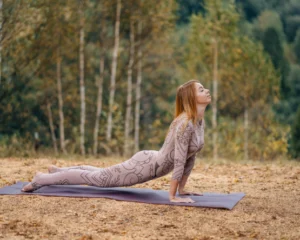
| 7 | Bhujangasana | Cobra Pose | Inhale, slide forward and raise the chest into a cobra. Elbows slightly bent, shoulders away from ears. |
| 8 | Adho Mukha Svanasana | Downward Facing Dog | Exhale, lift hips and tailbone to form an inverted V. Press heels toward floor, lengthen spine. |
| 9 | Ashwa Sanchalanasana | Equestrian Pose (Left) | Inhale, step the right foot forward between the hands. Mirror of pose 4 on the opposite side. |
| 10 | Hastapadasana | Standing Forward Bend | Exhale, bring the left foot forward to join the right. Fold forward, mirror of pose 3. |
| 11 | Hasta Uttanasana | Raised Arms Pose | Inhale, roll up slowly, raise arms overhead with a slight backbend. Mirror of pose 2. |
| 12 | Pranamasana | Prayer Pose | Exhale, bring the palms back to the chest in Namaste. Return to stillness. One round complete. |
| PRO TIP: In traditional Hatha Yoga (as taught at Hari Om Yoga Vidya School), each pose is also associated with a Surya Bija mantra (e.g., Om Hram, Om Hrim, Om Hrum). Chanting these silently or aloud during practice deepens the meditative and spiritual dimension of Surya Namaskar significantly. |
The Breath Pattern in Surya Namaskar
Breath is not optional in Surya Namaskar — it is the thread that unites all 12 poses into a single flowing practice. The correct breath pattern is:
- Inhale during backbends and expansive poses (chest opens, arms rise)
- Exhale during forward bends and contracting poses (chest compresses, spine folds)
- Hold briefly (Kumbhaka) in Plank Pose (Dandasana) — optional for advanced practitioners
- Never force the breath — it should remain smooth, deep, and audible (Ujjayi breathing is recommended in Ashtanga-based styles)
A well-practised Surya Namaskar round takes approximately 45–75 seconds when linked to natural breath. Rushing through the poses defeats the purpose — speed without breath awareness becomes mere exercise; breath with movement becomes yoga.
Surya Namaskar Benefits: Physical, Mental, Emotional & Spiritual
The benefits of regular Surya Namaskar practice are well-documented across both traditional yoga texts and modern scientific literature. Here is a comprehensive breakdown:
| Dimension | Key Benefits |
| Physical | Improves flexibility, strengthens muscles, aids weight loss, boosts cardiovascular health, enhances posture, detoxifies through sweat, improves digestion |
| Mental | Reduces stress and anxiety, sharpens focus, calms the nervous system, improves sleep quality, builds discipline and mental resilience |
| Emotional | Balances mood, releases emotional tension, cultivates patience and presence, supports emotional regulation, boosts self-awareness |
| Spiritual | Connects body, mind, and spirit, honors the sun as life force, deepens breath-movement synchrony, builds inner awareness and gratitude |
Scientific Evidence for Surya Namaskar Benefits
Research published in peer-reviewed journals confirms several measurable benefits:
- A 2013 study in the International Journal of Yoga found that 6 weeks of Surya Namaskar practice significantly improved muscular strength and endurance in college-age students
- Research in the Journal of Bodywork and Movement Therapies (2011) showed measurable improvements in spinal flexibility and reduced lower back pain after 12 weeks of regular practice
- Studies on cortisol levels (the primary stress hormone) show that 20 minutes of Sun Salutation practice reduces cortisol as effectively as standard aerobic exercise
- A 24-week study demonstrated significant improvements in VO2 max (cardiovascular fitness) in participants practising 12 rounds of Surya Namaskar daily
- BMI reduction of 1.5–2.2 points was observed in overweight participants who practised 25+ rounds per day for 6 months
Experience at Hari Om Yoga Vidya School, Rishikesh
Hari Om Yoga Vidya School, nestled in the spiritual heartland of Rishikesh — the Yoga Capital of the World — has trained hundreds of yoga teachers from across the globe. Surya Namaskar holds a central place in every curriculum, whether in the foundational 100-Hour YTT or the advanced 300-Hour YTT program.
What Students Learn Beyond the Poses
In the traditional approach taught at Hari Om, Surya Namaskar is not just physical conditioning. Students learn:
- The mythology of Surya (the solar deity) and why dawn practice connects the practitioner to natural rhythms
- The 12 Surya mantras and their corresponding qualities of consciousness (e.g., Om Mitraya Namaha — saluting the quality of universal friendship)
- How to teach Surya Namaskar safely — sequencing, modifications, alignment cues, and breath cueing for different student bodies
- How Surya Namaskar serves as a diagnostic tool — a teacher can observe a student’s relationship to their own breath and body through how they flow
Student Outcomes
Students who arrive at the YTT program with no prior yoga experience consistently report that after 21 days of daily Surya Namaskar practice:
- Hamstring flexibility improved to the degree that they can touch the floor in Uttanasana
- Morning stiffness in the back and shoulders disappeared
- Sleep quality improved, often within the first week
- Energy levels stabilized — less afternoon fatigue, more mental clarity
- A natural reduction in appetite for heavy, processed foods
These are not anecdotal outliers — they are consistent outcomes observed batch after batch. The practice works because it is complete, systematic, and respects the intelligence of the body.
Common Surya Namaskar Mistakes and How to Avoid Them
1. Holding the Breath
The most common and most damaging mistake. Holding the breath creates internal pressure and defeats the meditative quality of the practice. Fix: Let breath lead, pose follows. If you cannot breathe freely in a pose, come out of the full expression.
2. Collapsing the Lower Back in Cobra Pose
Many beginners push too high into Bhujangasana (Cobra Pose), compressing the lumbar spine. Fix: Keep a slight bend in the elbows, engage the core gently, and think of lengthening the spine rather than arching it.
3. Dropping the Hips in Plank Pose
In Dandasana (Plank), sagging hips put undue pressure on the lower back. Fix: Engage the core, lengthen through the crown of the head and heels. Think of your body as a firm, straight plank of wood.
4. Rushing Through the Sequence
Speed without breath awareness is exercise, not yoga. Fix: Count the breath, not the rounds. Each inhale and exhale should be full and complete before transitioning.
5. Locking the Knees in Forward Bends
Hyperextending the knees in Uttanasana can cause joint damage over time. Fix: Micro-bend the knees, especially in the early weeks until hamstring flexibility improves.
6. Twisting the Neck Instead of Looking Up
In Cobra and Upward Dog, some beginners crank the head back aggressively. Fix: Gaze forward and slightly upward. The back of the neck should remain long, not compressed.
7. Skipping Savasana After Practice
Surya Namaskar generates heat and activates the sympathetic nervous system. Without 3–5 minutes of Savasana afterward, the practice remains incomplete. The relaxation phase is where physiological benefits consolidate.
Beginner Tips: How to Start Surya Namaskar Safely
Starting a new practice correctly creates a foundation for lifelong sustainability. Here is how beginners should approach Surya Namaskar:
- Begin with just 4 rounds (2 per side) and gradually increase by 2 rounds per week
- Always warm up — 5 minutes of gentle neck rolls, hip circles, and wrist rotations before beginning
- Use a non-slip yoga mat — safety in transitions is critical
- Practise in the morning on an empty stomach — ideally within 30 minutes of waking
- Face east (toward the rising sun) whenever possible — even a symbolic direction activates the psychological effect
- Count breaths, not rounds — quality over quantity, especially in the first 30 days
- Work with a qualified teacher for the first 2–4 weeks — alignment errors that go uncorrected become injury risks
- Rest in Child’s Pose (Balasana) whenever you feel tired — rest is part of the practice
- Use props — yoga blocks under the hands in forward bends, a wall for Downward Dog until hamstrings open
- Track your progress in a journal — note energy levels, mood, flexibility, and sleep quality after each session
| HOW MANY SURYA NAMASKAR PER DAY? For general health and fitness: 12 rounds daily. For weight loss: 25–50 rounds. For yoga teacher training preparation: 12 rounds at a moderate pace, holding each breath 4–6 counts. Beginners: start with 4 rounds and build gradually over 4–6 weeks. |
Surya Namaskar Variations
Classical Hatha Surya Namaskar
The traditional version as codified in the Hatha Yoga tradition. Holds in Bhujangasana (Cobra Pose) and includes mantra chanting. Slower pace, emphasis on static holds and awareness.
Ashtanga Surya Namaskar A and B
Sun Salutation A (9 vinyasas) and B (17 vinyasas) are the foundation of the Ashtanga Primary Series. Surya A is faster and uses Chaturanga Dandasana (Four-Limbed Staff Pose) and Urdhva Mukha Svanasana (Upward Dog) instead of Cobra. Surya B adds Warrior I into the sequence.
Kundalini Surya Namaskar
Incorporates mantras, mudras, and longer breath retentions. Less physically dynamic but more energetically intense. Often practised at 3:00 AM (the Amrit Vela, or ambrosial hours).
Chair Surya Namaskar
A seated or supported modification for seniors, those with mobility limitations, or post-surgical students. Every pose has a seated or wall-supported equivalent.
Conclusion
Surya Namaskar is not a trend. It is a 5,000-year-old technology for harmonizing the human body with the natural world — and it works. Whether your goal is weight loss, flexibility, stress reduction, spiritual depth, or becoming a certified yoga teacher, 12 minutes of focused Surya Namaskar practice every morning will transform your relationship with your body and mind.
At Hari Om Yoga Vidya School in Rishikesh, we begin every day with the Sun Salutation — not because the schedule demands it, but because every teacher and student who has committed to the practice has experienced its power firsthand. The poses are simple. The sequence is ancient. The results are profound.
Start with four rounds tomorrow morning. Face east. Close your eyes for a breath at Pranamasana. Then move.
Your practice begins now.
| READY TO GO DEEPER? Hari Om Yoga Vidya School offers Yoga Alliance-certified 100-Hour, 200-Hour, and 300-Hour Yoga Teacher Training programs in Rishikesh. Surya Namaskar is taught from Day 1 — including traditional mantras, alignment coaching, anatomy, and teaching methodology. Applications open for upcoming batches. |
Q: What is the best time to practice Surya Namaskar?
A: The ideal time is at dawn, facing east toward the rising sun, on an empty stomach. This aligns with the body’s natural cortisol peak, maximizing energy and alertness. However, early morning is not mandatory — any time before a meal is beneficial. Avoid practice within 2 hours after eating a full meal.
Q: How many Surya Namaskar should I do per day?
A: Beginners should start with 4–6 rounds daily (2–3 per side) and build to 12 rounds over 4–6 weeks. For weight loss, 25–50 rounds per day is recommended. Yoga teacher training aspirants typically practise 12 rounds in the morning as part of a complete sadhana (personal practice).
Q: Does Surya Namaskar help with weight loss?
A: Yes. One round of Surya Namaskar burns approximately 10–12 calories. 25 rounds burn roughly 250–300 calories. Combined with a balanced diet, daily Surya Namaskar creates a meaningful calorie deficit. It also improves metabolic rate, reduces cortisol (which drives fat storage), and builds lean muscle — all of which support sustainable weight management.
Q: What are the 12 names of Surya Namaskar poses?
A: The 12 poses are: 1. Pranamasana (Prayer), 2. Hasta Uttanasana (Raised Arms), 3. Hastapadasana (Forward Bend), 4. Ashwa Sanchalanasana (Equestrian), 5. Dandasana (Plank), 6. Ashtanga Namaskara (Eight-Limbed), 7. Bhujangasana (Cobra), 8. Adho Mukha Svanasana (Downward Dog), 9. Ashwa Sanchalanasana (Equestrian, other leg), 10. Hastapadasana (Forward Bend), 11. Hasta Uttanasana (Raised Arms), 12. Pranamasana (Prayer).
Q: Can Surya Namaskar replace a gym workout?
A: For flexibility, functional strength, cardiovascular fitness, stress management, and mind-body connection — yes, Surya Namaskar offers comparable or superior outcomes to a general gym workout. For sport-specific strength, heavy muscle hypertrophy, or rehabilitative training, it is best used as a complement rather than a replacement.